<<< Czech Filmz >>>

Friday, December 08, 2006

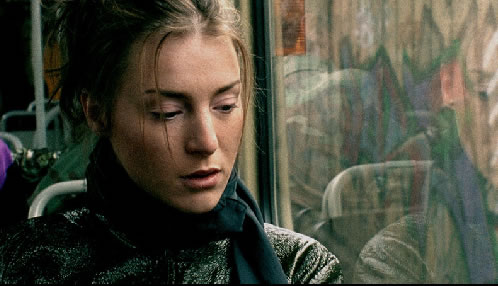
Restart/Restart (2005)


Thursday / 14th December 2006 / 20:00

Czech Republic, Finland / 2005 / 79 minutes / director: Julius Ševčík / screenplay: Ondřej Ládek, Julius Ševčík / cinematography: Kasimir Lehto / editing: Aleksi Raij / music: Filip Míšek / cast: Lenka Krobotová (Sylvie), Filip Čapka (Martin), Anna Polívková (Marie), Václav Jiráček (Robert), Hana Seidlová (mother) /


The new film by Julius Ševčík is a Czech-Finnish coproduction and deserves to be included into this series of the most interesting Czech debuts. Unfortunately the word "interesting" doesn't go hand in hand with - the best. Restart is Ševčík's graduating film on FAMU, the famous Prague film school. He made it with the help of the Axman Production - the young production company, and the University of Arts and Design in Helsinki. The film was shot on locations in Prague (e.g. in music clubs Roxy, Radost FX), while postproduction work (editing, sound, special effects) took place in Finland. Due to the low budget, Restart took 8 months only to be completed.

The film is worth attention due to it's visual approach and the quality of editing (the only nomination for the Czech Lion for Best editing). Unfortunately it wasn't as successful as the filmmakers expected, nor was it pronounced revolutionary - the major limitation being the screenplay, even though it was the second co-work of Ševčík and Lehák. The story of young, pretty and successful Sylva is relatively simple. The total length of the film could be much shorter. However, we can admire the work of camera and the editing. The filmmarkers didn't succeed to hold our interest with a story that was meant to be a breathtaking drama of a strong but fragile woman. The film has a good casting, making use of new actors. Lenka Krobotová, better known as a theatre actress in the Dejvické Theater, plays the character of Sylva very convincingly. And again, due to poor screenplay, she is more of a silly, bored, juvenile girl.

Restart is a best example of current trends that have entered Czech cinema in recent years- expressive music and original camera shots. Filip Míšek (member of the music group Khoiba) composed film music and added other songs from the best of electro music scene. Finnish cameraman Kasimir Lehto first shot on Super 16 mm format and finally transferred it to 35 mm, making the film look more attractive. But no matter the visual attractivity, the film somehow forgets to tell the one-day story and tends more to "show." Unfortunately, it is far from its model - Tom Tykwer's Lola Run.

As such, Restart is a faultless work of the Finnish part of the staff. But still it is the most interesting debut of 2005.
Ševčík has already prooved he knows how to make films. Let's hope that in the future he will show us that he has also something to say.

Petr Vlček

Thursday, November 30, 2006

Boredom in Brno/Nuda v Brně (2003)


Thursday / 7th December 2006 / 20:00

Czech Republic / 2003 / 103 minutes / director: Vladimír Morávek / screenplay: Vladimír Morávek, Jan Budař / cinematography: Diviš Marek / music: Jan Budař / editing: Jiří Brožek / cast: Kateřina Holánová (Olga Šimáková), Jan Budař (Stanislav Pichlík), Miroslav Donutil (Miroslav Norbacher), Martin Pechlát (Jaroslav Pichlík), Jaroslava Pokorná (Miriam Šimáková) /


Boredom in Brno is one of the most curious debuts in contemporary Czech cinema - awarded at several festivals (including five Czech Lions), popular with cinemagoers as well as film critics, written by an actor and shot by a 38-year old film debutant who had a flourishing career in the field of theatre behind himself.

Vladimír Morávek made Boredom in Brno as a personal project, collaborating with actors he knew from his theatre years in Hradec Králové (where a large portion of the film was shot), and interweaving personal experience into the plot. Brno functions as a metaphor of a specific state of mind - a town where time stands still sometimes, where nothing crusial is happening, from where all ambitious people flee to Prague, the cultural mecca of Czech Republic, or dream about it at least. Brno stands for the clash of small and big ambitions in the lives of people, a city with the atmosphere of a small town where after sunset the streets get empty suddenly.

The title of the film also plays with the concept of small and big events in human life - it takes place in one hot and lazy summer day, and the only "big" event is consummated sex between two young people, the main characters Olinka and Standa, who are in love with each other and spend their first night together despite circumstances. With this concept, undermining the significance of "official" history in the lives of ordinary people, Morávek goes back to the poetics of Czech New Wave with its emphasis on interpersonal relationships in the scope of common everyday situations, communication gaps, awkwardness and irony.

Boredom in Brno tries to capture a breaking point in one´s life (sexual initiation) with all its spontaneous comicality, clumsiness and beauty. The structure of the film allows for chance to enter - loosely connected episodes, stones in a mosaic, which intersect in the end, remind us not only of the New Wave films, but also of Jim Jarmusch and his Czech follower Petr Zelenka. As in Zelenka´s films, the characters of Boredom have their peculiarities and suffer from the lack of meaningful communication, friendship, or love. What makes Morávek´s debut special, however, is his ability of critical detachment combined with sympathy for those who are able to make decisions, even if results are different from the expectations.

Veronika Klusáková

Thursday, November 16, 2006

Girlie/Děvčátko (2002)


Thursday / 23rd November 2006 / 20:00

Czech Republic / 2002 / 83 minutes / director: Benjamin Tuček / screenplay: Benjamin Tuček / cinematography: Antonín Chundela / editing: Petr Mrkous / music: Ivo Heger / cast: Dorota Nvotová (Emma) , Jana Hubinská (Emma´s mother), Ondřej Vetchý (taxi driver without a taxi), Dana Batulková (Karel´s mother) /


The Girlie is a debut of director and screenwriter Benjamin Tucek, who is better known as assistant director of Saša Gedeon's film, Return of the Idiot (1999), or the screenwriter of Marek Najbrt's Champions (Mistři, 2004, nominated for the Czech Lion award). But this film is not just his personal debut but also a national one - it is the first Czech film shot with a digital camera HDTV (the same one George Lucas used in Star Wars).

17 year-old Ema is the girlie of the title, the main character of the film. She's looking for happiness (a theme frequently used by another Czech director Bohdan Sláma) in the dullness of a housing estate. The gloomy atmosphere of the place is amplified by digital camera shots, making it look even more rough.The way of shooting neon club signs, night underground - all the common things - give you a feeling you see something brand new. But this is not the reason, why Tuček's debut is being compared to Miloš Forman's earliest films (especially Blonde in Love). There are many other aspects than just the character of a young girl, for example a ball or naive views of the youngsters (Karel). While Forman managed to create lively chatacters on the screen, Tuček, despite seeming authencity of the film, didn't. His characters are described in epizodes, as in Zelenka´s Buttoners, thus we gather some information about them in their dialoques, but much remains hidden until the very end. Paradoxically Girlie ends just at the moment we're getting to know the characters better.

The film possesses, besides some limitations, all the qualities of trendy Czech films. The casting is good, though some actors were cast only for their dramatic type, it was shot at attractive places - through the film we can get in touch with the Czech club scene as well as with drugs. Beside its clip aesthetics, the film greatly emphasises its music score. Girlie is ranked among so called "Generation films". However, its appeal to young audiences is more important than testifing to any generation feeling or parent-child issues. The Girlie tries to say more then just: "Parents should not take drugs."

Petr Vlček

Thursday, October 19, 2006

Wild Bees/Divoké včely (2001)


Thursday / 2nd November 2006 / 20:00

Czech Republic / 2001 / 92 minutes / director: Bohdan Sláma / screenplay: Bohdan Sláma / cinematography: Diviš Marek / editing: Jan Daňhel / music: Miroslav Šimáček / cast: Pavel Liška (Laďa), Tatiana Vilhelmová (Božka), Zdeněk Raušer (Kája), Vanda Hybnerová (Jana), Jaroslav Dušek (game keeper) /


To watch Wild Bees is actually like watching a Czech New Wave film which was never made. It is built on the same principles and what is more, it deliberately relies on them. There are so many echoes and allusions. The raffle on the fire ball reminds us of Forman´s masterpiece The Fireman´s Ball (you cannot possibly think of anything else when you watch a scene where Božka is stealing) and everytime the train passes on the screen, Menzel´s Closely Observed Trains pop into your mind. If you add to this Sláma´s second film Something Like Happiness, there is no doubt that if there is someone who is able to revive the era of great Czech cinema with its specific feeling, it is him.

What strikes you first is the atmosphere. It is so realistic that it actually balances between a boring and a watchable film. The main character of Kája, played by non-actor Zdeněk Raušer, is so bad in his role that after few minutes you actually believe that he is not acting but playing his real self (and you notice that there are only few words in his repertoir which, to be honest, suit him). Luckily the rest of the professional cast save the film. Tatiana Vilhelmová´s performance is brilliant as usual and she proves that her position of one of the greatest actresses in Czech Republic is well deserved. Pavel Liška´s performance of Laďa, a great fan of Michael Jackson, is again one of the actor´s not very clever, attractive, neither lucky characters, with whom you nevertheless fall in love with in the end.

In a sense Wild Bees is a rural version of Ondříček´s Loners. The life in a small village in Moravia has its own problems which range from alcohol addiction (who would have thought that old ladies drink so much?!) and gambling addiction to typical relationship issues. However, one finds out gradually that the setting is not that crusial - whether it is situated in a village or a big town, problems people have are pretty the same.

Štefan Titka

Friday, October 06, 2006

Whisper/Šeptej (1996)


Thursday / 19th October 2006 / 20:00

Czech Republic / 1996 / 82 minutes / director: David Ondříček / screenplay: David Ondříček, Jan Novák, Tomáš Mašín / cinematography: Alexander Šurkala / music: Jan P. Muchow, Colorfactory / editing: Petr Turyna / cast: Tatiana Vilhelmová (Anna), Martin Myšička (Kytka), Jan P. Muchow (Filip), Jan Čechtický (Speedy), Kateřina Winterová (Irma) /


With Whisper David Ondříček started a new trend in Czech cinema. On one hand he returns to the stylistic and thematic means used by the Czech New Wave directors - main characters played by non-actors, personal situations demonstrated through simple, almost trivial dialogues in which the relationships between characters are visible best. On the other hand Whisper introduces a new city aesthetics and values shared by dance music fans. the plot of the film is Nevertheless directly connected with Forman´s 1965 Loves of a Blonde. The main character Anna (Tatiana Vilhelmová) leaves the village and heads to Prague to free herself from the dominance of her father-colonel. Just like the character of Andula in Loves of a Blonde, Anna starts with euphoria brought by life in the city with all its reckless and dandy style, only to realize later that under the surface, reality is quite different.

Anna finds herself in the capital for a couple of days and gradually discovers the pros and cons of the mondaine life of a group of young people, especially of two brothers Speedy and Filip. Filip becomes Anna´s guide in the Babel of free life and showy parties, as well as of personal problems of the young people in Prague.

Whisper opened in 1996 as a promising debut of David Ondříček (the son of Forman´s director of cinematography Miroslav Ondříček) though from a certain point of view it stays somewhere between a film with sovereign generation statement and a film that goes back to the tradition of Czech New Wave inspired by cinéma vérité. The film´s name alludes to something incommunicable, a series of forbidden topics about which people do not talk or about which Czech cinema and young filmmakers were remaining silent at least. In the relationship between a naive and simple-minded Anna and the group of city dandies the question of different values arises - individuality, fight for survival and pleasures stand against Anna´s sincerity, kind-heartedness and altruism.

Ondříček´s debut, though sometimes naive, full of cliché and uneasiness, can be seen as the first manifesto of the new aesthetics of 90s generation of filmmakers - it reflects fascination with dance music (leading male characters are played by members of the bands Ecstasy of St. Theresa and Ohm Square), easiness and "drifting" of the city teenagers, together with emancipation of homosexuals. Key role is played by civil dialogues that touch at crucial feelings and ideas shared by the generation that are nevertheless difficult to express. With this film the so called "Losers´ Films" wave announces itself. Films that later create plot cliché and tend to be shallow sometimes (24, Brouk v hlavě, Cabriolet).

With Whisper Ondříček portrayed the generation of people around twenty. His latter film Loners is a more stylized and more confused image of thirty-something city people with settled habits and values.

Pavel Bednařík

Sunday, October 01, 2006

Requiem for a Maiden/Requiem pro panenku (1991)


Thursday / 5th October 2006 / 20:00

Czech Republic / 1991 / 99 minutes / director: Filip Renč / screenplay: Filip Renč, Igor Chaun (based on a report by Josef Klíma) / cinematography: Juraj Fándli / editing: Jan Mattlach / music: Ondřej Soukup / cast: Anna Geislerová (Marika), Barbora Hrzánová (Johanka), Soňa Valentová (Volfová), Eva Holubová (Krocová) /


There are two kinds of films - those that are pleasant and those like Requiem for a Maiden. A film that attacks you and leaves you exhausted and depressed. Requiem tells a story based on real events. After her father´s assault, and due to an administrative mistake, the main character, fourteen-year-old Marika is moved to hospital for mentally affected adolescents. She suffers from post-traumatic shock but from the very start of her stay it is obvious that she does not belong in there. What she sees in the hospital is pure horror, beyond imagination. She encounters every possible means of man´s humiliation. The girl patients are being drugged all the time without considering their actual condition, and handled with unprecedented cruelty. Nobody is responding to Marika´s constant protests against the unbearable situation. However what seemed to be utmost horror is nothing compared to the night which ends it all.


If you think about it, it is quite unusual to start one´s career with this kind of film. On one hand it is brave and undoubtedly courageous to take a script based on a true story and shoot it as your first feature film. On the other hand there are several risks that go hand in hand with such a decision. One of them is the very question of an audience: who would like to watch such a depressive film? Renč´s depiction of true events is realistic, disturbing and scary at the same time. And I would say that the effect is even more scary today than at the time the film was shot. It seems to be not only a depiction of what happened in one hospital for mentally affected adolescents but more like a metaphor of the era as a whole. Frightening in its morbidity and silent accepting of injustice happening in the country. Renč makes this world look as unpleasant as possible, being significantly helped by his collaborators - the director of cinematography Juraj Fándli and composer Ondřej Soukup. And I guarantee you that you will not want this soundtrack to become part of your favourite music collection. The same holds for the film. It is a kind of film that you will always want to forget but that you will actually never be able to. Whether it is good or bad, is up to you to decide.

Štefan Titka

Thursday, September 28, 2006

FIRST THINGS FIRST - PROGRAMME

Thursday | 5.10. 2006 | 20:00
Requiem for a Maiden | Requiem pro panenku | 1991

Czech Republic ׀ 1991 ׀99 minutes ׀ director: Filip Renč ׀ screenplay: Filip Renč, Igor Chaun (based on a report by Josef Klíma) ׀ cinematography: Juraj Fándli ׀ editing: Jan Mattlach ׀ music: Ondřej Soukup ׀ cast: Anna Geislerová (Marika), Barbora Hrzánová (Johanka), Soňa Valentová (Volfová), Eva Holubová (Krocová) ׀

For his debut,director Filip Renč chose a report from the book "Brutality" by Josef Klíma,in which the author depicts a story of thirteen-year-old Marika,who by mistake of administration gets to a hospital for mentally affected adolescents. There she experiences passivity of its management and despotism of the staff towards the patients. Such inhuman treatment leads to an unavoidable incident. This harsh realistic film, inspired by a true story, with depressive music by Ondřej Soukup and appearance of 16-year-old Anna Geislerová as Marika, belongs to the most significant and courageous debuts in Czech cinema.


Thursday | 19.10. 2006 | 20:00 |
Whisper | Šeptej | 1996

Czech Republic | 1996 | 82 minutes | director: David Ondříček | screenplay: David Ondříček, Jan Novák, Tomáš Mašín | cinematography: Alexander Šurkala | music: Jan P. Muchow
, Colorfactory | editing: Petr Turyna | cast: Tatiana Vilhelmová (Anna), Martin Myšička (Kytka), Jan P. Muchow (Filip), Jan Čechtický (Speedy), Kateřina Winterová (Irma) |

Anna is a 16-year-old girl, who runs away to find out what life is like outside
her village. She explores the real citylife. She spends a couple of unususal days in the city, and learns about the complexity of relationships when she finds herself among two dazed and confused homosexuals. Before he made his "cult" film „Loners“, David Ondříček had established his specific directing style in this film. „Whisper“, which has started a wave of Czech teenmovies, has also excellent music score, composed by Jan P. Muchow, a prominent figure of contemporary Czech club scene.


Thursday | 2.11. 2006| 20:00
The Wild Bees | Divoké včely | 2001

Czech Republic ׀ 2001 ׀92 minutes ׀ director: Bohdan Sláma
׀ screenplay: Bohdan Sláma ׀ cinematography: Diviš Marek ׀ editing: Jan Daňhel ׀ music: Miroslav Šimáček ׀ cast: Pavel Liška (Laďa), Tatiana Vilhelmová (Božka), Zdeněk Raušer (Kája), Vanda Hybnerová (Jana), Jaroslav Dušek (game keeper) ׀

Little village in Northern Bohemia represents a unique world with its own lifestyle and rules.
The villagers live their everyday stereotypes and their only contact with culture is a local pub. Kája is a gamekeeper and he is in love with Božka, but he is too shy to express his feelings about her. Božka goes out with Láďa, a local dandy, whose main interest is imitating his idol Michael Jackson. Božka realizes she wants more from this relationship. Bohdan Sláma, whose recent film „Happiness“ has won several awards at various festivals, combined experienced actors with amateurs and thus gave a realisticportrait of a countrylife in „Wild Bees“.


Thursday | 23.11. 2006 | 20:00
Girlie | Děvčátko | 2002

Czech Republic ׀ 2002 ׀ 83 minutes ׀ director: Benjamin Tuček ׀ screenplay: Benjamin Tuček ׀ cinematography: Antonín Chundela ׀ editing: Petr Mrkous ׀ music: Ivo Heger
׀ cast: Dorota Nvotová (Emma) , Jana Hubinská (Emma´s mother), Ondřej Vetchý (taxi driver without a taxi), Dana Batulková (Karel´s mother) ׀

Emma is 17 years old, she lives in a housing estate with her mother.
She doesn´t know who her father is. She works in a second hand shop, hangs out in bars in the evenings and ending up in bed with another one-night stand. Surrounded by weird citizens Emma feels alone, until she meets her soulmate Karel, a shy pilot, whose parents are going through a crisis. In style, Benjamin Tuček´s debut resembles the films of David Ondříček. In „Girlie“ tries to depict the flurry of city life without any stylization. Jana Hubinská, starring as Emma´s mother, was awarded the Czech Lion for the Best performance in a supporting role.


Thursday | 7.12. 2006 | 20:00 |
Boredom in Brno | Nuda v Brně | 2003

Czech Republic | 2003 | 103 minutes | director: Vladimír Morávek | screenplay: Vladimír Morávek, Jan Budař | cinematography: Diviš Marek | music: Jan Budař | editing: Jiří Brožek | cast: Kateřina Holánová (Olga Šimáková), Jan Budař (Stanislav Pichlík), Miroslav Donutil (Miroslav Norbacher), Martin Pechlát (Jaroslav Pichlík), Jaroslava Pokorná (Miriam Šimáková) |

One night in Brno. Standa wants to lose virginity with his girlfriend Olinka,who
has therefore poisoned her mum, locked her in a pantry and made schnitzels. Meanwhile a group of women sip tangerine liquor and talk about the size of penis. Miroslav Norbacher, a famous autor, falls into depression because of his sexual dysfunction, Richard realizes he is not much of a heterosexual and bull terier Srdičko almost gets a heart attack. In short: Boredom in Brno. The film by one of the most significant Czech theatre directors Vladimír Morávek was awarded 5 Czech Lions in 2003 – with one for the Best Film of 2003.


Thursday | 14.12. 2006 | 20:00
Restart | Restart | 2005

Czech Republic, Finland ׀ 2005 ׀ 79 minutes ׀ director: Julius Ševčík ׀ screenplay: Ondřej Ládek, Julius Ševčík ׀ cinematography: Kasimir Lehto ׀ editing: Aleksi Raij ׀ music: Filip Míšek ׀ cast: Lenka Krobotová (Sylvie), Filip Čapka (Martin), Anna Polívková (Marie), Václav Jiráček (Robert), Hana Seidlová (mother) ׀

Sylva´s life, full of alcohol, dancing and love affairs, has changed since the night she made a fatal mistake. Suddenly she is alone. Sylva thinks she can put things in order. But everything she tries to do about it, leads her to the total restart. Julius Ševčík made his debut in Czech-Finland coproduction. Its style and visual preciseness bear comparison to the classics of American cinema. The film music was composed by Czech groups Khoiba and Moimir Papalescu and the Nihilists.

Czech Filmz strikes back with the czech film debuts!

FIRST THINGS FIRST / DEBUTY PŘEDEVŠÍM!

The programme of this year´s Czech Filmz project is focused, if not on the best, than at least on the most outstanding debuts of Czech young and promising filmmakers. After 1989 many debutants contributed to the Czech cinema. Only a few of them succeeded, making a promising step to their future career. During six evenings in two weeks time you will have the oportunity to see the most important debuts shot after 1989. Starting with an alarming reconstruction of a true story "Requiem for a Maiden," by Filip Renč, we will switch to a different sphere - the complexity of relationships, which is a main theme of David Ondříček´s "Whisper." From Bohdan Sláma -the director of the most successful recent film "Happiness" we bring you his debut " Wild Bees." This film will be followed by "The Girlie" by Benjamin Tuček and the whole project will finish with "Boredom in Brno" by Vladimír Morávek and Julius Ševčík´s "Restart."

Thursday, May 18, 2006

KOLYA /Kolja (1996)


Thursday / 8th June 2006 / 20:00

Czech Republic, Great Britain, France / 1996 / 108 minutes / director: Jan Sverak / screenplay: Zdenek Sverak / cinematography: Vladimir Smutny / editing: Alois Fisarek / music: Ondrej Soukup / cast: Zdenek Sverak (Frantisek Louka), Andrej Chalimon (Kolya), Libuse Safrankova (Klara), Ondrej Vetchy (Broz), Nela Boudova (Brozova) /

It is always problematic to say about a film that it is nice. Nice films have difficult position. They are often accused of emotional blackmail and of overdoing scenes. Kolya proves that even nice films can work with melodramatic stereotypes and clichés without being embarrassing.

Kolya could be seen as a Dickensian story on a boy whose mother had to leave him in a foreign country with a strange man and who tries to find her at any costs. However, it isn´t only about a boy and surely it isn´t about finding someone´s mother. Throughout his long and successful career Zdenek Sverak has developed a unique sense for credible stories and characters. His screenplays are usually bitter comedies and Kolya is just another perfect example - no matter how witty it is, it doesn´t hide sentimental atmosphere and the unpleasant aspect of the times in which the story is set (some scenes can make Czechs cry rather than anything else, especially the one where Louka is interrogated by the police). Although there was a danger that the screenplay could end in making fun of cultural differences between the Soviets and Czechoslovaks and the inability of mutual understanding, both Sveraks were awared of this and decided to avoid the easy way.

Kolya is a deserved success of a work of the father and son duo. Jan Sverak proved that with Elementary School he wasn´t just lucky. Kolya definitely deserved its Oscar. Not only for its sentimental story, but for its sophisticated play with melodramatic stereotypes.
Štefan Titka

The Elementary School / Obecná škola (1991)


Thursday / 25th May 2006 / 20:00

Czech Republic / 1991 / 90 minutes / director: Jan Sverak / screenplay: Zdenek Sverak / cinematography: Frantisek A. Brabec / editor: Alois Fisarek / music: Jiri Svoboda / cast: Jan Triska (Igor Hnizdo), Zdenek Sverak (Soucek), Libuse Safrankova (Souckova), Rudolf Hrusinsky (principal), Vaclav Jakoubek (Eda) /


In the year 1991 director Jan Sverak hit the „big screen“ with this easy-going film which, although described as a children´s movie, is rather targeted at their parents. It was his feature debut and the truth is he was never supposed to make it. The screenplay of his father was originally written for another well-known Czech filmmaker – Vit Olmer. However, Olmer was busy at the time and the script passed to Zdenek Sverak´s son Jan.


Young Eda and his friend Tonda are members of a notorious boy class feared by every teacher. The only thing that concerns their minds is the colour of their teacher´s panties. That´s why after their constant resistance and refusal to listen, she goes mad and has to be replaced. The new teacher is a man of strict morals and teaching methods. His name is Igor Hnizdo, he is always dressed in army clothes and has plenty of war stories to tell, sounding too heroic to be true. The only thing he likes more than his cane are women. This man becomes the children´s hero.


Jan Sverak´s first film was a huge success of the year 1991. He showed his abilities and revealed a promising potential in the young generation of Czech filmmakers. It is always important to have a good screenplay to start with and Jan Sverak could not complain about that. His father offered him a script which was easy to follow and Jan Sverak understood it very well. He kept the poetics of it to the smallest details. The Elementary School is a funny film with plenty of remarkable scenes, dialogues and good acting, at the same time it manages to touch upon the darker side of the „good times“ – times of victory, but also the eve of the Communist coup in 1948.
Štefan Titka

Tuesday, May 09, 2006

CLOSELY OBSERVED TRAINS/Ostře sledované vlaky (1966)


Thursday / 11th May 2006 / 20:00

Czechoslovakia / 1966 / 89 minutes / director: Jiri Menzel / screenplay: Bohumil Hrabal, Jiri Menzel / cinematography: Jaromir Sofr / editing: Jirina Lukesova / music: Jiri Sust / cast: Vaclav Neckar (Milos Hrma), Jitka Bendova (Masa), Vladimir Valenta (station head), Libuse Havelkova (his wife), Josef Somr (train dispatcher Hubicka) /


Closely Observed Trains is a study of a specific microcosm, a remote railway station where two battles take place at the same time – that of growing up into manhood (the erotic experience of Milos Hrma) and of national liberation (the national resistance motif).

Menzel and his cameraman Jaromir Sofr visualized the story as a process of double initiation of the young Hrma. Small but precisely chosen details reveal the lives of several characters working in the station. The gently erotic atmosphere is framed by sexual adventures of the experienced dispatcher Hubicka, who becomes Milos´s teacher in professional as well as personal matters. The local sleepy order, represented by the ambitious pidgeon lover and station head, contrasts with the absurd war clamour (the Nazi councellor Zednicek).

Closely Observed Trains are not only an impressionistic study of an initiation process, but a celebration of the medium of film itself. Narrative sequences intertwine with sophisticated editing details from the sleepy station. Menzel also uses the station machinery as a metaphor of the awakening of young desire and passion. The tragedy of a personal failure and a suicide attempt is set in the realistic and sensitive depiction of life in a small Czech town.

Pavel Bednařík

Friday, April 21, 2006

BLONDE IN LOVE / Lásky jedné plavovlásky (1965)


Thursday | 27th April 2006 | 20:00 | Ceremonial Opening at 19:30!

Czechoslovakia / 1965 / 75 minutes / director: Miloš Forman / screenplay: Miloš Forman, Jaroslav Papoušek, Ivan Passer / cinematography: Miroslav Ondříček / music: Josef Illín / editing: Miroslav Hájek / cast: Hana Brejchová (Andula), Vladimír Pucholt (Milda), Vladimír Menšík (Vacovský), Milada Ježková (Mildova matka), Josef Šebánek (Mildův otec) /


The first Milos Forman Czechoslovak films draw much of their humor and thematic significance from the conflict of generations. Unlike his older colleagues and his new wave French contemporaries Forman is not a politically committed artist, his youths are not enraged radicals, but clumsy and timid girls and boys trapped in a world of awkward gentlemen´s agreements. They enter this world with their first job and feel its creeping amorality with all their innocence. The whole generation of fathers reveal as good-natured, but hollow.

Such revelations form the background of small dramas of understatement, poetry and unswerwing criticism of the common Czech lifestyle and view of life in 1960s. In Loves of a Blonde, as in his feature debut Black Peter (1963) Forman still favours the young, though the characters he chooses are victims rather than active people. In Firemen´s Ball (1968) his criticism - and cynism as some claim - falls indiscriminately upon the whole society. The atmosphere changes from humorous to icy in his last Czechoslovak work.

Forman is a master of Czech cinema, famous for his concern with common people, represented by a series of non-actors he found, his underlying critical vigor, exact and satirical, his humor, his civilian, cinéma vérité approach and excellent staging of absurd and empty speeches. He remains one of the most influential Czech directors of all time, telling more about Czechs than they would possibly like to say themselves.
Veronika Klusáková

Thursday, April 20, 2006

Invitation

Ladies and Gentlemen,

PASTICHE FILMZ in cooperation with the Department of Theatre, Film and Media Studies, Philosophical Faculty of the Palacky University and the Municipality of Olomouc invites you to a ceremonial opening of a new project CZECH FILMZ, a cycle of screenings of Czech films with English subtitles.
The opening will take place on Thursday, 27th April at 7:30 pm on the 3rd floor of the Art Centre of Palacky University (Univerzitni 3). After the opening, a screening of Milos Forman´s film Loves of a Blonde (1965) will follow.

The programme of the evening will go on from 10 pm in the 15 minutes club (Biskupske square 1).

On behalf of PASTICHE FILMZ

Pavel Bednařík

Veronika Klusáková
Štefan Titka
Petr Vlček

Tuesday, April 04, 2006

And the Oscar goes to...

The first set of screenings will present the best of Czech cinema - films that were awarded an Academy Award (Oscar) for Best Foreign Language Film - Closely Observed Trains, Kolya - or got a nomination: Blonde in Love, Elementary School.


Thursday / 27. 4. / 20:00 / Opening Ceremonial at 19:30!
BLONDE IN LOVE / Lásky jedné plavovlásky (1965)

Czechoslovakia / 1965 / 75 minutes / director: Miloš Forman / screenplay: Miloš Forman, Jaroslav Papoušek, Ivan Passer / cinematography: Miroslav Ondříček / music: Josef Illín / editing: Miroslav Hájek / cast: Hana Brejchová (Andula), Vladimír Pucholt (Milda), Vladimír Menšík (Vacovský), Milada Ježková (Mildova matka), Josef Šebánek (Mildův otec) /

A bittersweet tragicomedy of Miloš Forman continues in naivistic storytelling about growing-up teenagers in socialist Czechoslovakia in the 60's. Young and shameful Andula is a model of simple minded girl, who knows in her life only boardinghouse, factory and dreams. When she finally meets a charming musician Milda on a local dancing party, she is amused and decides to visit him in Prague, where he comes from. The situation then comes much more complicated, when Andula realizes, that she is not the one-and-only...


Thursday / 11. 5. / 20:00
CLOSELY OBSERVED TRAINS / Ostře sledované vlaky (1966)

Czechoslovakia / 1966 / 89 minutes / director: Jiří Menzel / screenplay: Bohumil Hrabal, Jiří Menzel / cinematography: Jaromír Šofr / editing: Jiřina Lukešová / music: Jiří Šust / cast: Václav Neckář (Miloš Hrma), Jitka Bendová (Máša), Vladimír Valenta (station master), Libuše Havelková (his wife), Josef Somr (train dispatcher Hubička) /

The end of WWII. A young and sexually not experienced man Milos Hrma follows the footsteps of his father and joins the railway company on a local railway station, where he goes through two different moments of iniciation, sexual and patriotic. In this local microcosm of a railway station he learns the job, has his first affair but the most significant task arises a bit later...


Thursday / 25. 5. / 20:00
THE ELEMENTARY SCHOOL / Obecná škola (1991)

Czech Republic / 1991 / 90 minutes / director: Jan Svěrák / screenplay: Zdeněk Svěrák / cinematography: František A. Brabec / střih: Alois Fišárek / music: Jiří Svoboda / cast: Jan Tříska (Igor Hnízdo), Zdeněk Svěrák (Souček), Libuše Šafránková (Součková), Rudolf Hrušínský (ředitel), Václav Jakoubek (Eda) /

It´s the year 1945. One class in a small village is so indisciplined and naughty that the teacher lady quits and is replaced by another one - the strict and militant Igor Hnizdo (Jan Triska) becomes a class teacher, and his only weakness seems to be his interest in young women. Reminiscence on the grow-up years in after WWII Czechoslovakia was writen by Zdeněk Svěrák and directed by his son Jan as a feature debut.


Thursday / 8. 6. / 20:00
KOLYA / Kolja (1996)


Czech Republic, Great Britain, France / 1996 / 108 minutes / director: Jan Svěrák / screenplay: Zdeněk Svěrák / cinematography: Vladimír Smutný / editing: Alois Fišárek / music: Ondřej Soukup / cast: Zdeněk Svěrák (František Louka), Andrej Chalimon (Kolya), Libuše Šafránková (Klára), Ondřej Vetchý (Brož), Nela Boudová (Brožová) /

Franta Louka is a concert cellist in Soviet-occupied Czechoslovakia, a confirmed bachelor and a lady's man. Because of his debts he accepts the offer of his friend to marry a Russian woman so that she can get Czech papers. An easy way to gain money gradually turns into a nightmare - Louka´s "wife" leaves the country and leaves her five-year-old son with his grandmother. When she dies, small Kolya comes to stay at Louka who is not very comfortable with that at first...

Friday, March 17, 2006

About the project


CZECH FILMZ

screenings of Czech films with English subtitles

Art Centre of the Palacky University – Screening Hall

The Czech Filmz project is a new project organized by Pastiche Filmz, and its focus is primarily upon foreigners studying, living and working in Olomouc. With Czech Filmz Pastiche Filmz tries to broaden and diversify the programme of local cinemas and give foreigners a unique opportunity to see contemporary as well as classical Czech films with English subtitles and learn more about the cultural past and present of Czech Republic.


Czech Filmz is aimed to become a traditional, long-term project which would increase the interaction of foreigners living in Olomouc by offering them a cultural meeting point.
The screenings will take place every semester (according to the Palacky University schedule), every semester the programme of Czech Filmz will be thematically focused – upon Oscar-winning Czech films, Czech film comedy, Contemporary debutants, Czech Documentary Filmmaking etc.